
Master Crate Training: Positive Troubleshooting Tips
Updated: Mar 5
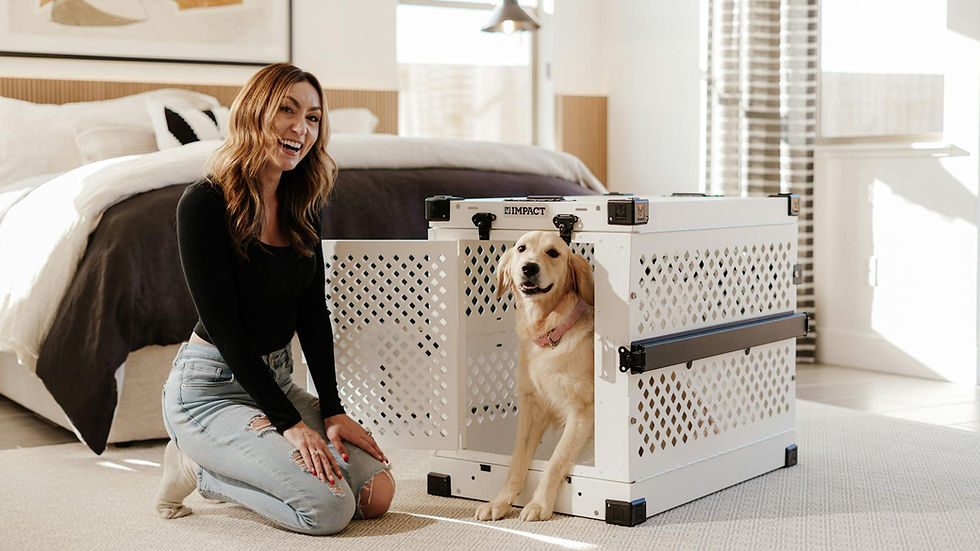
The journey toward successful crate training in dogs often begins with enthusiasm, yet it frequently encounters roadblocks. For professionals dedicated to canine behavior and welfare, knowing how to pivot when standard protocols falter is crucial. When a perfectly introduced crate suddenly becomes a source of anxiety or refusal, it signals the need to re-evaluate our approach rather than simply repeating the last step. This comprehensive guide focuses exclusively on advanced, positive crate training troubleshooting tips designed to help you effectively navigate these challenging scenarios, ensuring the crate remains a safe haven, not a source of stress. We will explore common pitfalls and implement research-backed strategies to solidify a positive association.
Diagnosing the Root Cause of Crate Resistance
Before implementing any fixes, we must accurately diagnose why the crate relationship has fractured. Resistance rarely stems from stubbornness; it almost always points to unmet needs or improper conditioning. Understanding the precise trigger dictates the correct intervention pathway.
Distinguishing Between Separation Anxiety and Confinement Distress
These two issues present similarly but require vastly different management strategies. Confinement distress is immediate upon closing the door, often involving frantic attempts to escape while the owner is present or nearby. Separation anxiety, conversely, manifests only when the dog is truly alone, potentially leading to destructive behavior long after the owner has departed.
Environmental Factors Affecting Crate Acceptance
The physical setup profoundly impacts the dog’s perception of the space. Is the crate located in a high-traffic area that offers no privacy, or conversely, is it placed somewhere so isolated that the dog feels abandoned?
Assess crate size: Ensure it accommodates the dog standing, turning around, and lying down comfortably, but avoid making it large enough to establish a separate potty area.
Check bedding comfort: Use familiar, washable bedding that feels inviting, not slippery or restrictive.
Location calibration: Position the crate near the family hub but shielded from direct drafts or excessive noise.
Positive Crate Training Troubleshooting Tips for Relapse
When foundational crate training seems to fail, the solution lies not in forcing compliance but in radically increasing the positive reinforcement density and decreasing the perceived threat level. These positive crate training troubleshooting tips focus on rebuilding trust incrementally.
Re-Engineering Initial Introductions
If the dog is already showing aversion, you must rewind the clock to the very first, most positive steps, ignoring any previous progress until trust is restored. This often means eliminating the door entirely for a period.
The "Open Door Sanctuary" method: Leave the crate door open 24/7 for several days. Feed all meals exclusively inside, use high-value chews only in the crate, and scatter treats throughout the space without requiring entry.
Duration Shading: Do not close the door until the dog voluntarily rests inside, heavy-lidded and relaxed, for extended periods.
Duration Micro-Increments: When you begin closing the door, start with a duration so brief—perhaps one second—that the dog barely notices, immediately rewarding calm behavior upon opening. Gradually increase this by seconds, not minutes.
Addressing Barrier Frustration: The Sound Barrier Technique
For dogs anxious about the physical barrier of the door, a fantastic positive crate training troubleshooting tip involves conditioning them to the sound and sight of the closing latch before it restricts movement. Use visual cues, like mimicking the latch sound with a distinct verbal marker ("Click!") just before delivering a jackpot reward when the dog is resting inside. This decouples the sound of the latch from the consequence of being confined.
Counter-Conditioning Negative Associations
If the crate has been used for punishments—a practice strongly discouraged in modern positive reinforcement methodology—the negative association must be overwritten with powerful positive experiences.
The "Crate as a Buffet": Only introduce the highest value, longest-lasting chews (like frozen KONGs stuffed with yogurt or specialized dental chews) when the dog is inside the crate. These should be treats the dog only receives in this location.
Desensitization to Departure Cues: If the dog panics when you grab your keys, start randomly grabbing your keys, performing a 10-second calm behavior (like sitting on the sofa), and then returning the keys without leaving. This breaks the predictive link between the cue and abandonment.
Integrating Advanced Management for Extended Stays
Successfully managing overnight stays or necessary daytime confinement requires a layered management approach built upon solid crate training foundations.
The goal is generalization: the dog must view the crate as a predictable, safe spot regardless of the time of day or the owner’s proximity. Avoid rushing the transition to crating while you are out of sight. If a dog shows stress cues (pacing, heavy panting, whining) within the first five minutes of you leaving, the session duration was too long, and you must return to shorter intervals immediately. Consistency in rewarding calm, resting behavior inside the crate is the single most effective element in long-term crate training success.
[FAQ] Q: How long should I wait before implementing positive crate training troubleshooting tips if initial training fails? A: If the dog displays clear signs of distress (excessive drooling, frantic attempts to escape, persistent vocalization) within the first week, immediately pause the closing of the door and revert to only positive association-building activities inside the open crate. Don't wait for the behavior to become entrenched. Q: Is it ever appropriate to use the crate for time-outs during training? A: Modern, force-free methodologies advise strictly against using the crate as punishment or isolation for misbehavior. The crate must exclusively be associated with positive experiences, safety, and desirable resources like high-value food items. Q: My puppy cries immediately when I leave the room. What is the best troubleshooting step? A: Implement the micro-increment technique. Close the door for one second, open it before the puppy whines, reward, and repeat. Slowly build up duration only when the puppy remains relaxed during the previous interval. Q: Can I use calming supplements to aid in positive crate training troubleshooting? A: While supplements can support an underlying anxiety condition, they are never a substitute for behavioral modification. Use them as an adjunct therapy, ensuring they are veterinarian-approved, alongside the systematic desensitization steps outlined here.
Conclusion: Solidifying Long-Term Crate Acceptance
Mastering crate training is a testament to patience and precise application of behavioral science. When setbacks occur, remember that these challenges are opportunities to strengthen the bond and refine your methodology. By applying these positive crate training troubleshooting tips—rewinding introductions, precisely counter-conditioning barrier frustration, and focusing intensely on rewarding calm occupancy—you transition the crate from a mere containment tool to an indispensable element of your dog’s enrichment and safety protocol. Commit to these detailed, positive adjustments, and you will observe a durable, relaxed acceptance of the crate environment, benefiting both the dog and the professional handler.
