
Boost Dog Focus: Puzzle Toys vs. Traditional Training
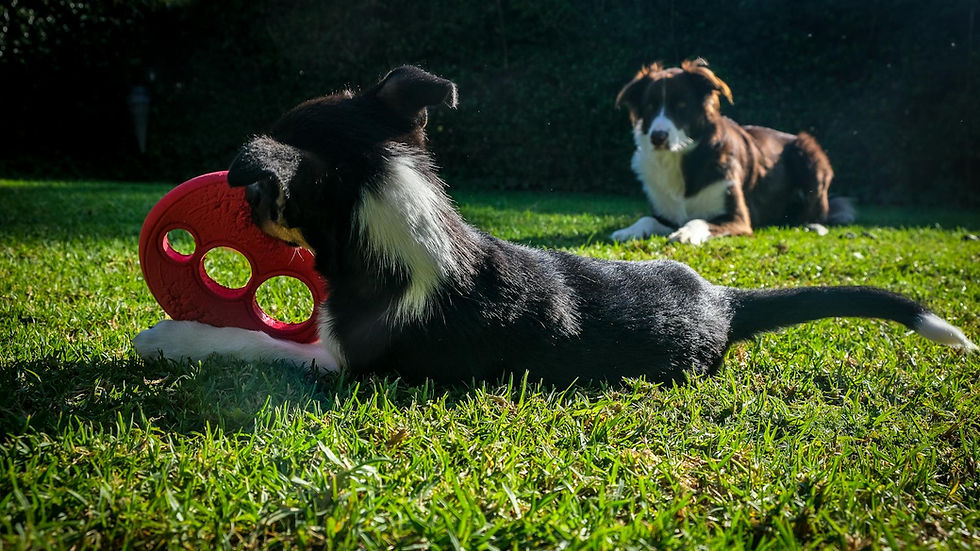
The modern professional working with canine behavior recognizes a critical truth: a well-behaved dog is an engaged dog. We spend countless hours refining obedience commands, perfecting leash manners, and establishing reliable recalls. Yet, often, the underlying issue is not a lack of discipline but an understimulated mind. When discussing methods for enhancing canine engagement and reducing problematic behaviors rooted in boredom or anxiety, the conversation frequently revolves around puzzle toys versus traditional training. This comparison is vital because it forces us to evaluate the holistic needs of the canine learner, moving beyond simple stimulus-response conditioning into genuine cognitive enrichment.
The Imperative of Mental Stimulation in Canine Development
Before diving into specific tools, we must cement the importance of mental stimulation in dog training. Cognitive engagement is not a luxury; it is a biological necessity. Dogs, particularly working and sporting breeds, are genetically predisposed to problem-solve, search, and manipulate their environment. Depriving them of this outlet leads directly to behavioral entropy—chewing furniture, excessive barking, or compulsive behaviors. Research consistently shows that mentally taxing activities can reduce cortisol levels (stress hormones) more effectively than physical exercise alone in many contexts.
Defining the Limitations of Purely Repetitive Training
Traditional training relies heavily on repetition, positive reinforcement markers, and building strong associations with cues. This is foundational and non-negotiable for basic safety and obedience. However, focusing solely on this approach can sometimes lead to habituation or low-level frustration if the dog anticipates every outcome. While drilling "sit-stay" improves focus under distraction, it doesn't challenge the dog's intrinsic problem-solving pathways. We need a method that encourages independent thought.
Integrating Puzzle Toys Versus Traditional Training Methodologies
The comparison between puzzle toys versus traditional training is less about choosing one over the other and more about strategic integration. Traditional training builds reliability; puzzle toys build cognitive resilience and independence. Think of it as diversifying your training portfolio.
How Puzzle Toys Enhance Cognitive Function
Puzzle toys, ranging from slow feeders to complex dispensing mechanisms, force the dog to analyze a problem, test solutions, and persist until a reward is achieved. This mimics natural foraging behavior, which is inherently satisfying for dogs.
Problem Solving: Toys require multi-step solutions, enhancing executive functions.
Frustration Tolerance: Successfully navigating a tricky toy teaches a dog that persistence yields rewards, directly improving frustration tolerance in other training scenarios.
Reduced Anxiety: Forcing a dog to focus intently on a solvable task diverts attention from underlying stressors or anxieties.
Slowing Ingestion: Beyond mental benefits, slow feeders prevent dangerous gorging, a common issue with high-drive breeds.
Real-world application often shows that a dog who struggles to hold a five-minute stay in a novel environment may calmly work for fifteen minutes on a KONG dispenser because the goal is clear and the reward pathway is direct.
Synergy: Bridging the Gap Between Play and Obedience
The most effective professionals utilize the inherent motivation derived from puzzle play to bolster traditional skills. If a dog masters a high-level dispensing puzzle, they have just proven they can focus intensely for an extended duration. This focus can then be redirected.
For instance, after a successful, challenging puzzle session, you may find the dog is more attentive during a short obedience session. The mental "warm-up" primes the brain for learning. We are essentially teaching the dog that focused effort, regardless of the context, results in positive outcomes. This cross-contextual generalization is highly valuable.
Selecting Appropriate Cognitive Tools for Professional Application
When recommending enrichment strategies, specificity is key. Not all dogs benefit equally from the same apparatus immediately. We must assess the dog's current frustration threshold and baseline engagement level.
Beginner Level: Simple roll-and-release balls or treat-hiding in a towel require minimal problem-solving but establish the concept of working for food.
Intermediate Level: Sliding panels or basic level-one puzzle boards encourage sequencing and sustained engagement. These bridge the gap nicely from simple lick mats.
Advanced Level: Multi-stage puzzles requiring pawing, lifting, and rotating components demand true executive function planning and are excellent for highly intelligent or bored working dogs.
It is crucial that owners understand that initial failure with a difficult puzzle should be managed by stepping back to an easier version, reinforcing the success cycle, rather than letting the dog become permanently discouraged. This mimics how we scaffold complex obedience sequences.
Measuring Success: Beyond the "Trick"
Ultimately, the success of integrating puzzle toys is measured in the generalization of improved focus outside the toy context. When a dog exhibits better impulse control in the kitchen, responds faster to a "wait" command at the door, or can settle more readily near high-value distractions, the mental exercises are paying dividends. The goal is not to replace foundational training but to create a more capable, resilient, and focused learner ready to tackle complex real-world scenarios guided by traditional cues.
Frequently Asked Questions
Are puzzle toys safe for dogs with resource-guarding tendencies?
Resource guarding must be addressed separately using established counter-conditioning protocols before introducing high-value food puzzles. Introducing food puzzles without first resolving guarding can exacerbate the behavior due to the high perceived value of the toy's contents. Start with very low-value treats or non-food items under supervision.
How long should a training session incorporating puzzle toys last?
Mental work is often more tiring than physical exercise. Sessions should generally be kept short, ideally 10 to 20 minutes, especially for novice users or highly intense breeds. Over-fatigue can lead to poor performance and frustration.
Do puzzle toys effectively replace the need for structured obedience training?
Absolutely not. Puzzle toys provide enrichment and cognitive development, supporting focus. Traditional training provides essential safety cues and structure. They are complementary tools, requiring both for optimal canine welfare and management.
What is the main benefit of using puzzle toys over just training with high-value treats?
While high-value treats are excellent motivators in traditional training, puzzle toys require the dog to actively work and problem-solve to earn the treat. This active engagement promotes sustained focus and frustration tolerance, which passive treat delivery does not.
The sophisticated canine professional understands that nurturing a dog's intrinsic drive to learn through cognitive challenge is as vital as mastering the perfect heel. By thoughtfully weaving complex puzzle toys versus traditional training strategies together, we move beyond mere compliance toward fostering true partnership, leading to a calmer, more engaged, and demonstrably focused companion ready for the complexities of modern living. Invest in the mind, and the behavior naturally follows.


