

Decode Dog Posture- Relaxed Versus Tense

The subtle architecture of canine communication often remains obscured to the untrained eye, yet it forms the bedrock of effective interspecies relations, especially within professional fields like veterinary medicine, behavior consultation, and security services. Accurately interpreting a dog's internal state is not merely a soft skill; it is a critical safety measure and diagnostic tool. This detailed examination focuses on understanding relaxed versus tense posture in canids, providing the expertise required to differentiate between a contented animal and one signaling distress or impending defensive behavior through subtle cues in understanding facial expressions and body language in dogs.
The Spectrum of Canine Posture: Beyond 'Happy' or 'Sad'
Instead of being a binary switch, canine body language functions on a continuum. Dogs are rarely 100% calm or 100% aggressive; instead, most interactions involve different levels of arousal that are influenced by the situation. Professionals need to be skilled at situating these signals. Analyzing the complete kinetic chain, from the ear set to the tail carriage, is essential for an effective evaluation.
Identifying True Relaxation: The Baseline State
A truly relaxed dog exhibits what we often term a "neutral" or "low-arousal" posture. This state suggests comfort, trust in the environment, and low physiological stress indicators. Professionals use this as the baseline against which all other deviations are measured.
Characteristics of a Relaxed Canine Posture:
Weight distribution is even, centered, and fluid, allowing for easy movement in any direction.
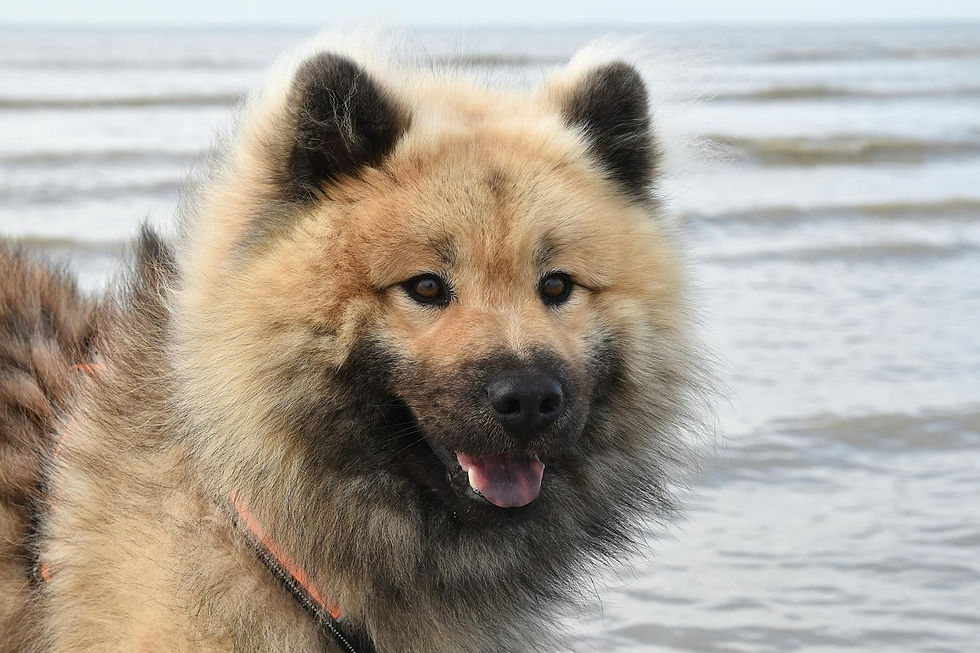
The mouth is often slightly open, appearing soft, perhaps exhibiting a gentle, loose "smile."
Eyes appear soft, sometimes with a relaxed squint or "half-closed" appearance.
Ears are held naturally, aligned with the head shape, or slightly to the side.
Tail carriage is neutral, often hanging loosely or exhibiting slow, sweeping movement, unrelated to high excitement.
Muscle tone is pliable, not rigid or braced.
When encountering a dog exhibiting these markers during an initial assessment, we can proceed with lower cautionary levels, focusing on relationship building rather than immediate risk mitigation.
Decoding Tension: Subtle Signals of Arousal and Anxiety
Tension arises long before a dog exhibits overt aggression or flight signals. These early warning signs, which are frequently overlooked by the general public, are critical indicators for professionals looking to intervene before the situation escalates. Understanding these precursors is critical for understanding relaxed vs. tense posture.
Early Indicators of Subclinical Stress
Subclinical stress signals, also known as calming signals when observed alone, are frequently the first indication that a dog is encountering something that exceeds its coping threshold. These subtle movements aim to reduce perceived tension in the environment.
Subtle Tension/Appeasement Indicators:
Lip licking when no food is present.
Frequent yawning, especially when the dog is not tired.
Turning the head or body away from the stimulus (avoidance).
"Whale's eye," where the whites of the eyes are visible in a crescent shape.
Tense mouth, sometimes pulling back toward the ears.
These signals indicate cognitive dissonance or mild anxiety. A professional should immediately recognize these as prompts to adjust the environmental setup or the handling technique to reduce perceived threat.
Overt Postural Indicators of High Tension
As arousal levels rise, the physical posture becomes more rigid and directed. This shift indicates that the dog is about to engage, either defensively or offensively, or that it is extremely motivated to flee. This exemplifies the stark contrast between understanding facial expressions and body language in dogs.
When evaluating high tension, observe the body's profile:
High Tension/Defensive Postures:
The body becomes low to the ground (crouching or leaning away) or stiffly upright.
Weight is often shifted backward, preparing for retreat, or forward, preparing for a rush.
The tail is tightly tucked, held high and stiff, or vibrating rapidly without a loose wag.
Stiff, direct staring, often combined with a low growl or teeth baring.
Piloerection (hackles raised) along the neck or back, indicating high sympathetic nervous system activation.
Muscles are locked, and movement is restricted or highly deliberate.
A dog in a high-stress state requires immediate respect for its boundaries. Intervention at this stage must prioritize safety and de-escalation protocols, while also acknowledging the dog's perception of a significant threat.
Contextual Analysis: Why Posture Matters in Professional Settings
Interpreting posture without context is dangerous. A play bow, for example, has a low front end that is frequently mistaken for fear, but it is explicitly invitational when combined with loose overall body tension and a high, rapidly wagging tail. Similarly, stiffness during a veterinary examination indicates pain or fear from handling, but not necessarily aggression toward the handler.
We must integrate multiple data points, including signal duration, proximity to the stimulus, and accompanying vocalizations. For example, a low, sustained growl accompanied by rigid frontal posture and direct eye contact, as opposed to a short, frustrated vocalization during nail trimming, necessitates immediate behavioral risk assessment. Mastery entails combining these elements into a cohesive threat or comfort assessment profile.
[FAQ] Q: How quickly can a dog shift from a relaxed posture to a tense one?
A: The intensity of the trigger and the dog's arousal threshold have a significant impact on the transition speed. A shift can happen in less than a second under extreme stress or surprise. Thus, in high-risk situations, regular monitoring is crucial.
Q: Is a tightly tucked tail always indicative of fear or tension?
A: A tucked tail is a strong indicator of anxiety or appeasement behavior, but the degree and accompanying body tension are very important. A slight lowering during a sudden loud noise is distinct from a tail clamped tightly between the hind legs when approached by a stranger.
Q: What is the difference between a "stiff" posture and a "braced" posture? A: A stiff posture implies general rigidity due to high arousal or fear, where the dog is frozen while assessing the situation. A braced posture is more active, involving the dog leaning into the stimulus, often seen in guarding behaviors where the animal is preparing for confrontation.
Q: How can I recognize tension in a dog? A: Visual assessment is based on indicators such as pupil dilation, the presence of tension lines around the muzzle from the shoulder to the back, and tail positioning, particularly when approaching known thresholds.
Conclusion: Applying Observational Knowledge
Gaining an understanding of the subtle differences between relaxed and tense posture improves one's professional skills and enables proactive, as opposed to reactive, management of dog behavior. Improved safety records and better welfare outcomes for the animals in our care are directly correlated with our ability to read subtle changes in dogs' body language and facial expressions. When there is uncertainty, always consider the side of caution; the best way to communicate professionally is to respect a dog's need for space. Commit to continuous observation, understanding that every dog communicates volumes, often silently, about its internal experience.